A database, redesigned around the people using it
Our internal system at the gallery had been running for years by the time we decided to redesign it. It tracked artworks, clients, sales, loans, exhibitions, shipping, insurance, the operational backbone of a growing organization. People had learned to work around it rather than with it.
The workarounds were the tell. Spreadsheets pulled from the system and maintained separately. Fields repurposed for things they weren't designed for. Whole categories of information living in someone's head or a shared Google Doc because getting it into the database felt like more trouble than it was worth. When people build shadow systems alongside a tool, they're not being difficult. They're solving a problem the tool doesn't handle well.
When people build shadow systems alongside a tool, they're not being difficult. They're solving a problem the tool doesn't handle well.
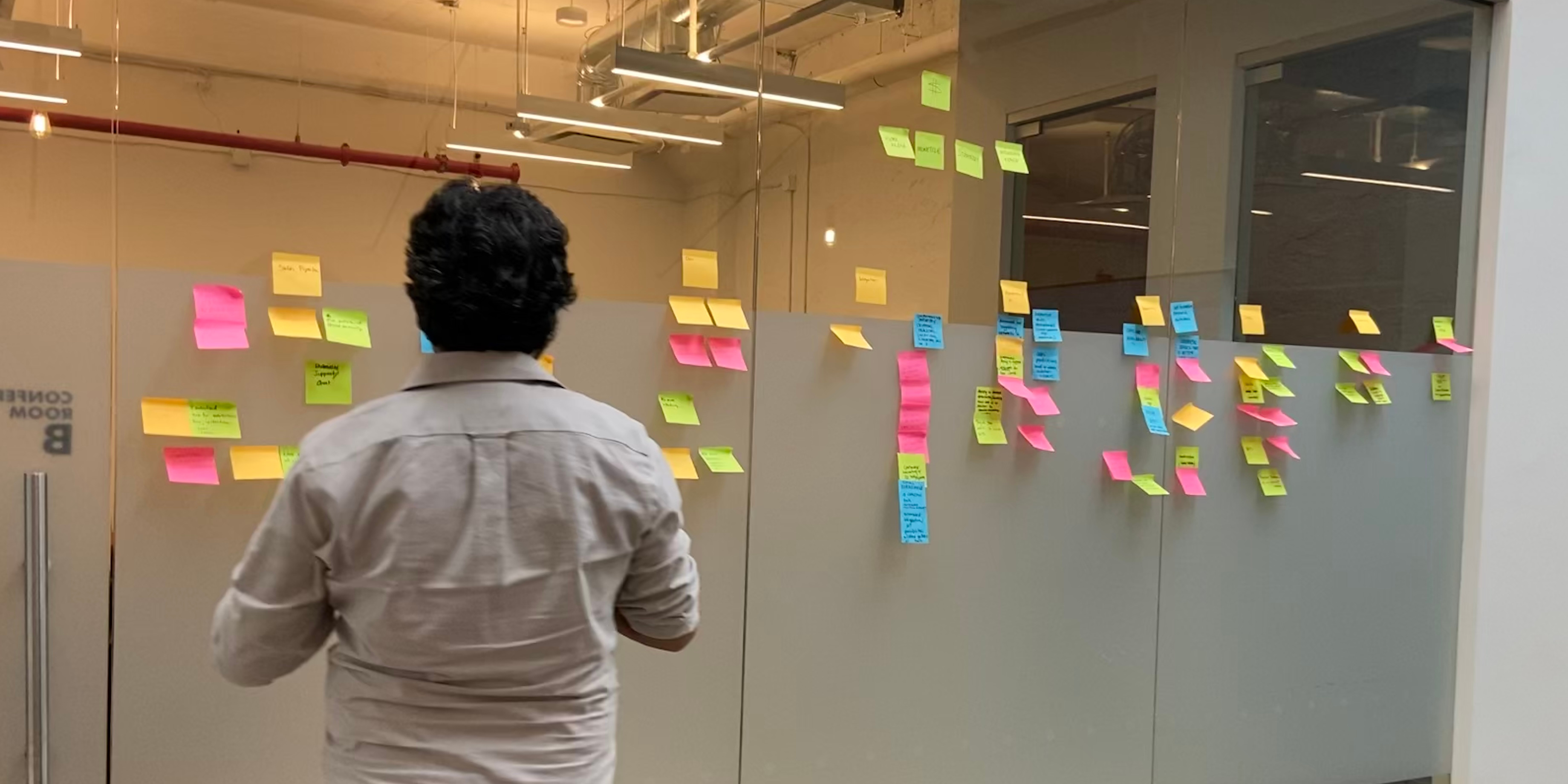
Feedback, brainstorming and prioritization were key to our process.
The redesign started with a lot of listening. What do you actually need to see when you open this page? What do you look for first? What do you wish you could do that you can't? The answers were different depending on who you asked, which turned out to be the key insight. A registrar tracking loan logistics needs completely different information at a glance than a salesperson reviewing a client's history. The old system had tried to serve everyone with the same layout, which meant it served no one particularly well. So we let people decide what they see. Customizable tile layouts on detail pages. User-defined columns on list views. The interface became something each person could shape to their own workflow rather than a fixed structure they had to adapt to.
We also looked at where the system was forcing people to do work a computer should obviously be doing. A salesperson offering ten artworks to ten different clients had to create each offer individually, write each email by hand, attach each artwork one at a time, then do it again for the next client. The new system let you assemble a group of clients and a group of works, and it drafted all ten emails at once, sitting in the salesperson's outbox ready to personalize or just send. The data was captured in a single action instead of ten. This feature alone cut the time spent on that process by more than 90%. It didn't just save time though, it enabled better data collection, and it saved the mental overhead of a process that had no reason to be that hard.
We made a deliberate choice to rebuild in parallel with the old system still running, which meant people could migrate to new features as they became ready rather than being forced over all at once. Gradually, there was less and less reason to use the old one. By the time we shut it down, nobody missed it. It felt like the best outcome of sunsetting such an essential system: not a massive launch, but a quiet transition.
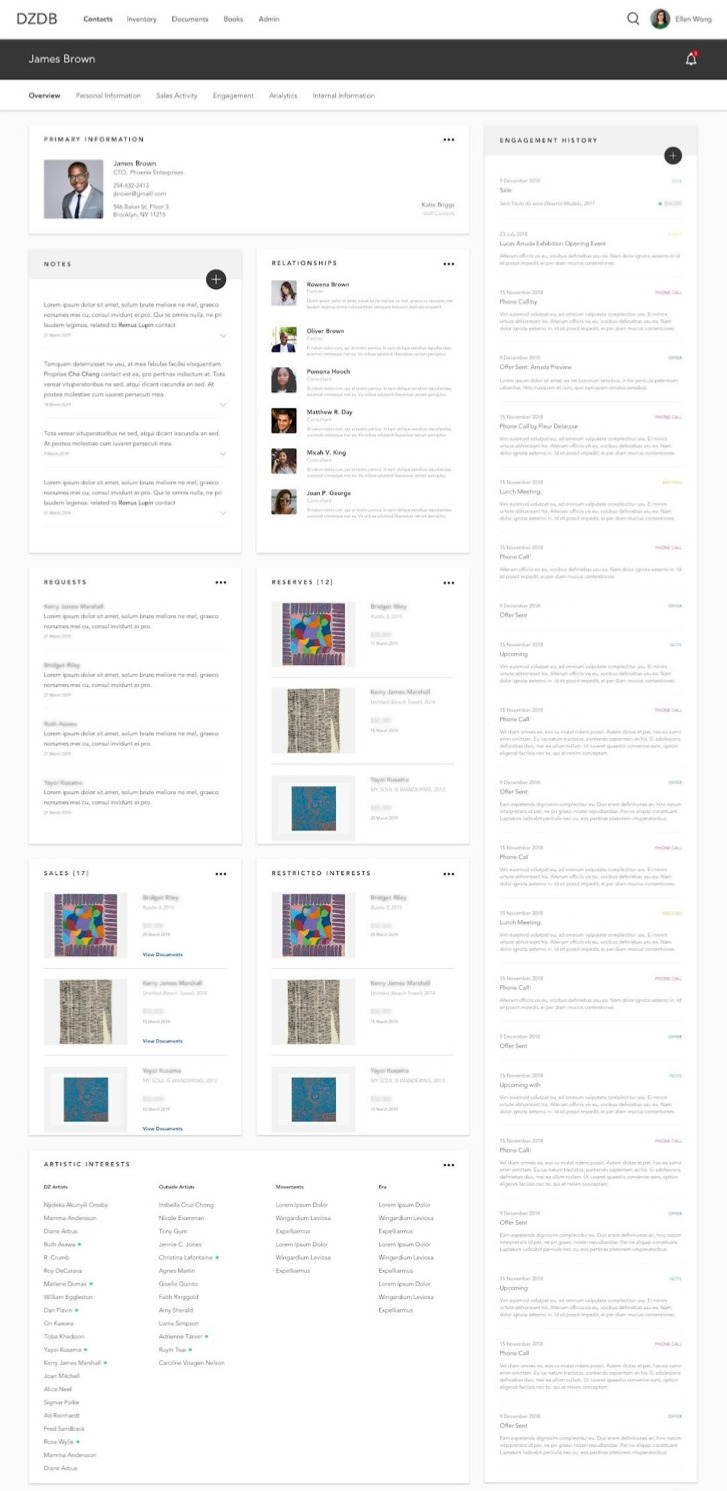
Customizable views allowed users to move tiles around and prioritize the information that mattered most to them.