Medal Madness, a game for the 2026 Winter Olympics
The 2026 Winter Olympics were coming up and I liked the idea of building something that would encourage my friends to pay attention to events they'd otherwise ignore. Biathlon. Ski Mountaineering. Double Luge. The Winter Olympics are full of sports that only exist in most people's awareness for two weeks every four years, and I wanted something that would make those events matter a little more.
The structure was straightforward: 21 participants, 116 events, 16 event categories. Participants would pick a country for each event and would earn points: 5 points if their country came in gold, 3 if silver, 1 if bronze. Since events finish continuously over two weeks across sixteen categories, I built a scoring system designed to sustain interest over time rather than eliminate people early. Category bonuses rewarded anyone who picked at least one medal in every event of a given category, which meant those points only resolved near the end when the last events in each category finished. A final bonus for guessing how many gold medals the top country would win gave everyone something to chase in the last days.
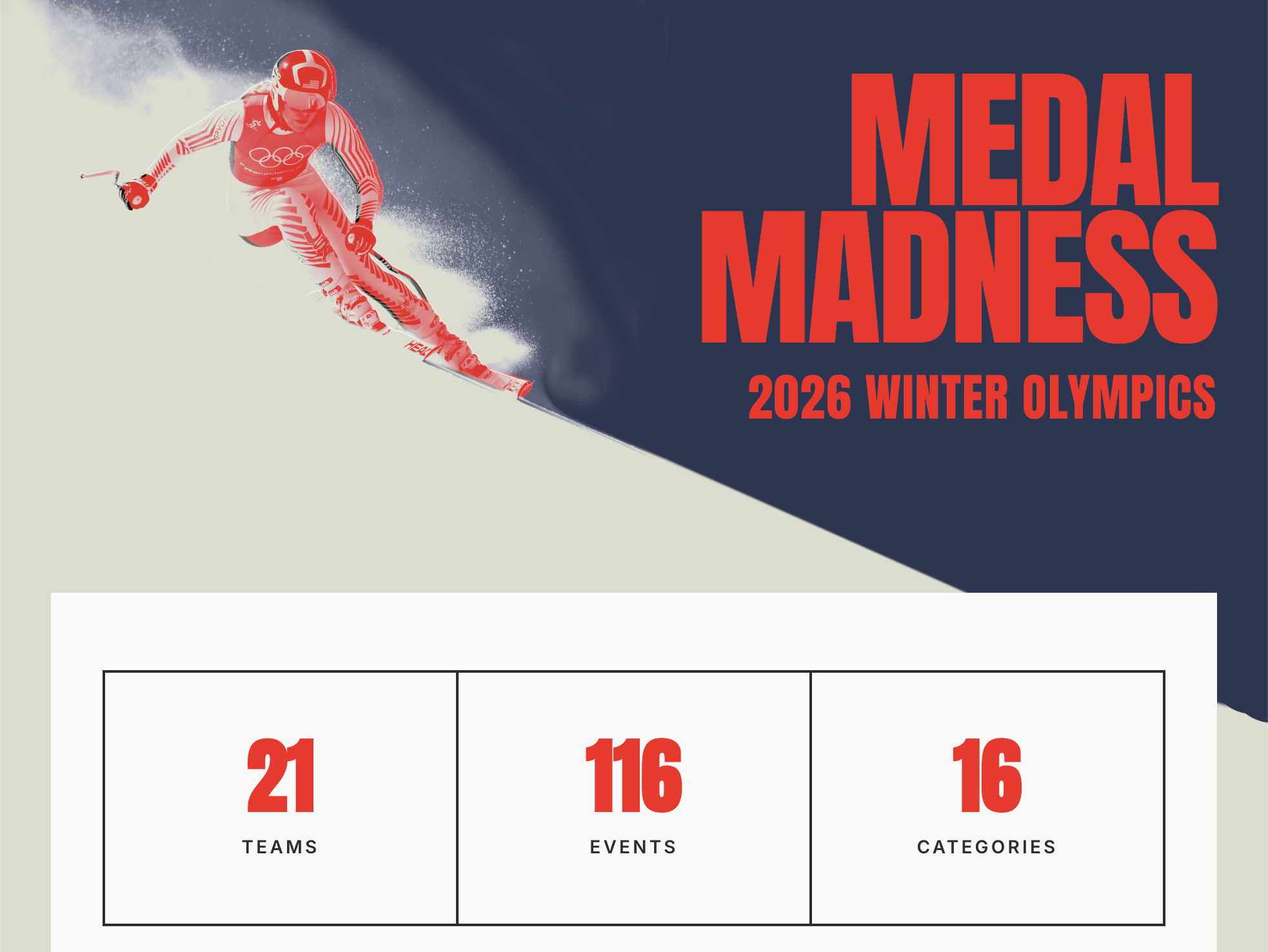
Medal Madness landing page design inspired by Italian Futurism.
It mostly worked. The top half of the field stayed genuinely competitive through the final weekend. The bottom half dropped off earlier than I'd hoped, though I think that reflects how much research people did going in more than a flaw in the scoring. The people who finished well had clearly done their research beforehand.
The part I enjoyed most wasn't the coding or the scoring logic. It was watching people engage with something I had made for them.
I sent daily email updates for the duration of the games. Standings, notable swings, small narratives about who had overtaken whom on what obscure event. I know several friends watched events they would have ignored because something was at stake. Some of them have mentioned going through withdrawals since it ended.
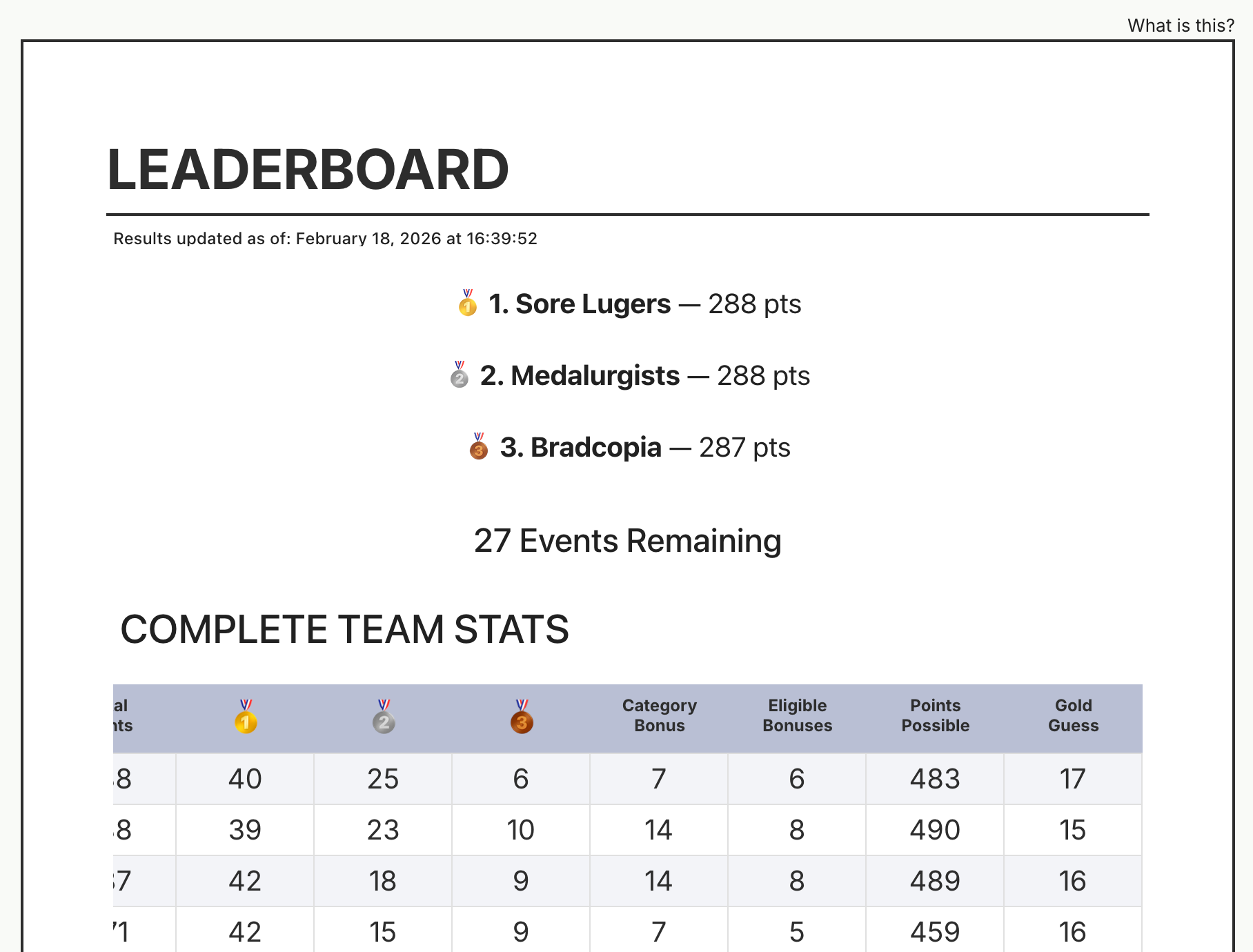
Leaderboard allowed participants to track their progress and encouraged competitiveness.
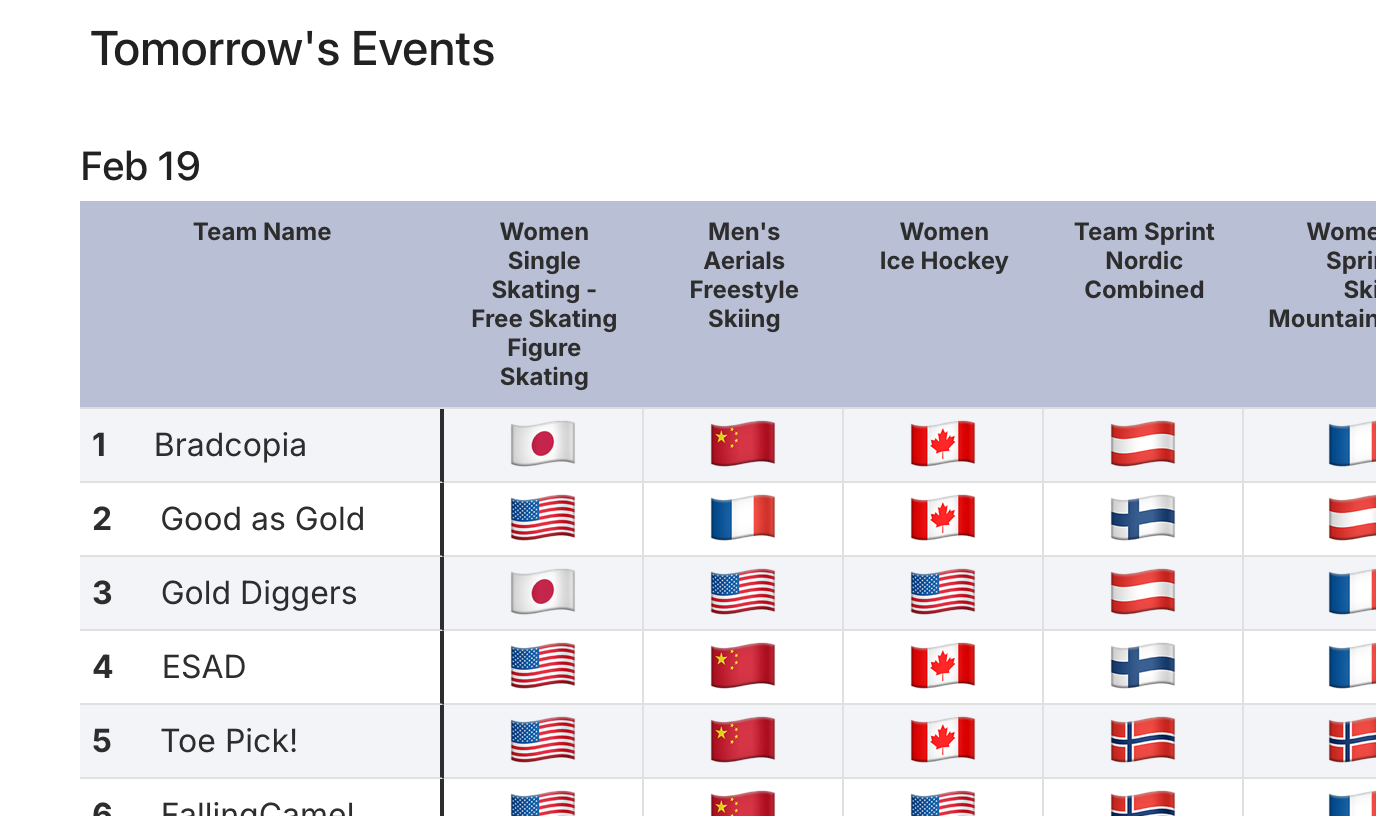
Participants could check in on the following day's events; their picks represented by the flag of the countries they chose.
For the design I wanted something with a little presence, even if the underlying technology was just Google Forms, Sheets and some python scripts feeding a simple webpage. The games were in Milan and I went looking for Italian design references. I landed on Futurism, partly because the movement was Italian, partly because it was about motion and speed which felt appropriate, and partly because its visual language is bold and relatively simple to work with. The result was functional more than refined, but I think it served its purpose.
Building this clarified something I had been circling around for a while. The part I enjoyed most wasn't the coding or the scoring logic. It was watching people engage with something I had made for them. That recognition connected back to work I had been doing for years without quite naming it.
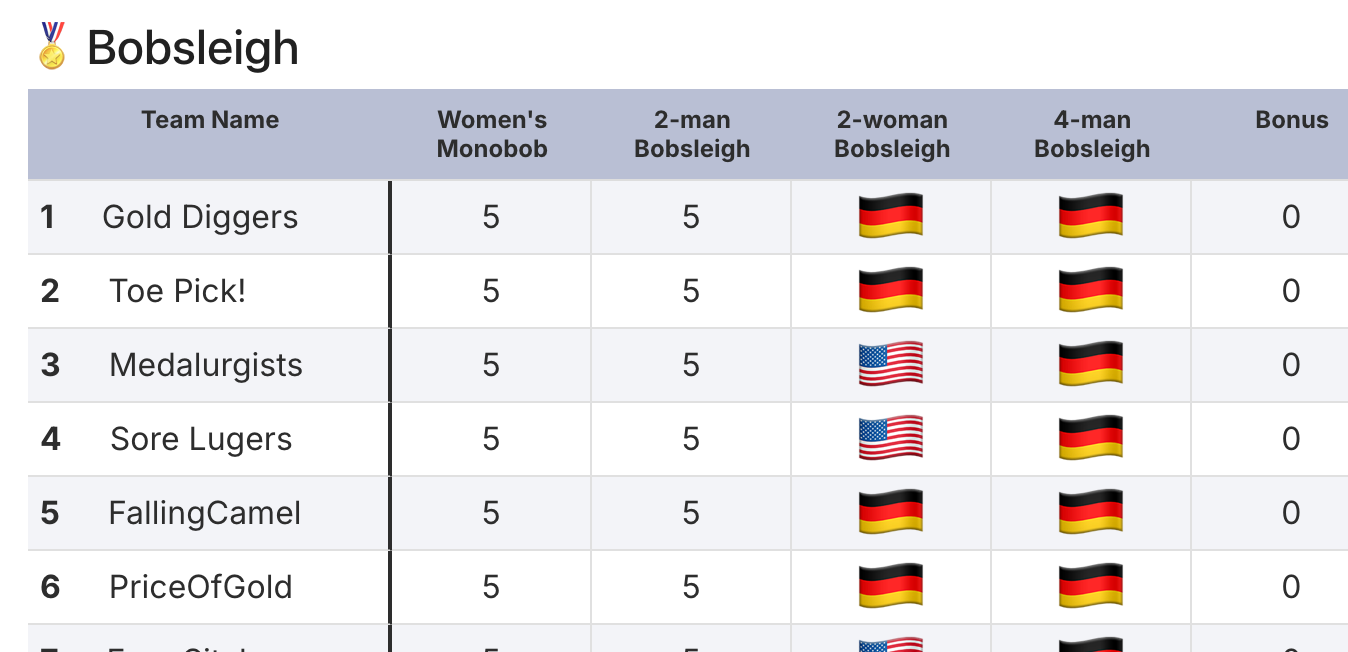
Participants could check in on specific category and event scores.