Building the Online Viewing Room
When we first started talking about selling top tier art online, my first instinct was that the market probably wasn’t ready for it, at least not at the level we operated. The art world runs on discretion and personal relationships, and putting inventory and prices on a screen felt like it cut against both. That instinct was a fairly common assumption across the industry.
What shifted my thinking was a year of quiet testing. We started placing works on third party platforms, enough to see whether people would actually buy art through a screen at meaningful price points. Turns out they would, which was enough to move the question from whether to how.
I pushed for something curated and considered, not because I was making the curatorial calls, but because I thought the space would only be as good as the judgment that went into programming it.
The how mattered more than we initially expected. We decided to build an Online Viewing Room, modeled loosely on the private physical spaces galleries use for collectors. The tendency was to start with work that wasn't moving through other channels, lower price points, things without immediate homes. I understood the logic, but I knew the space would reflect whatever we put into it, and that clients would sense that. I pushed for something curated and considered, not because I was making the curatorial calls, but because I thought the space would only be as good as the judgment that went into programming it.
The first year exceeded its targets, but the more telling validation came later, when we had the data infrastructure to actually look back at what the viewing room had produced over time. Clients who first encountered the gallery through the online space didn't just make a single purchase and disappear. Some went on to build ongoing relationships with their salespeople, purchasing through traditional channels long after their first online interaction. The Online Viewing Room turned out to be a growth channel in a way that hadn't been anticipated, and that finding quietly reframed how people thought about it.
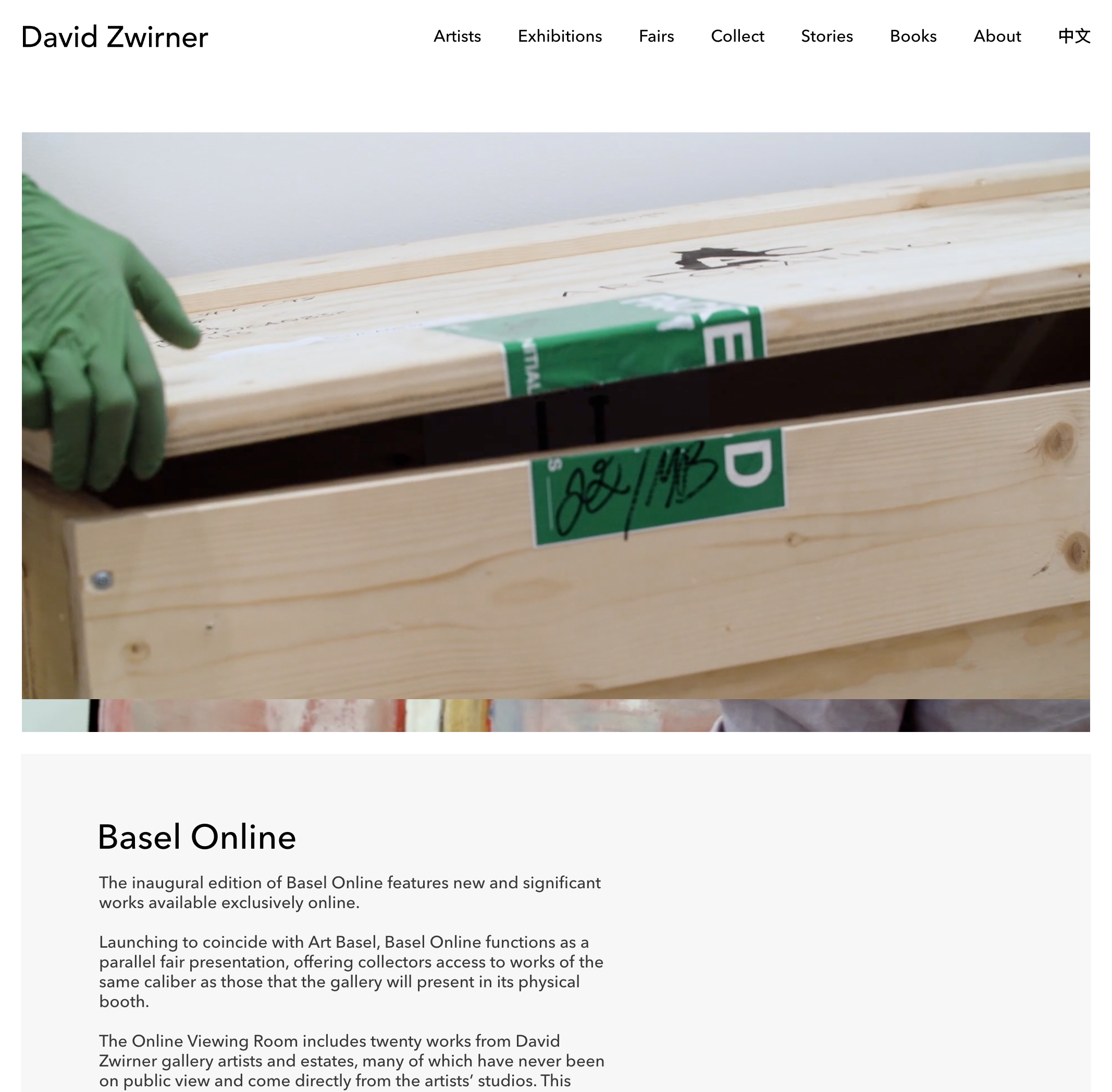
Mixing storytelling and artwork was essential for Online Viewing Rooms.
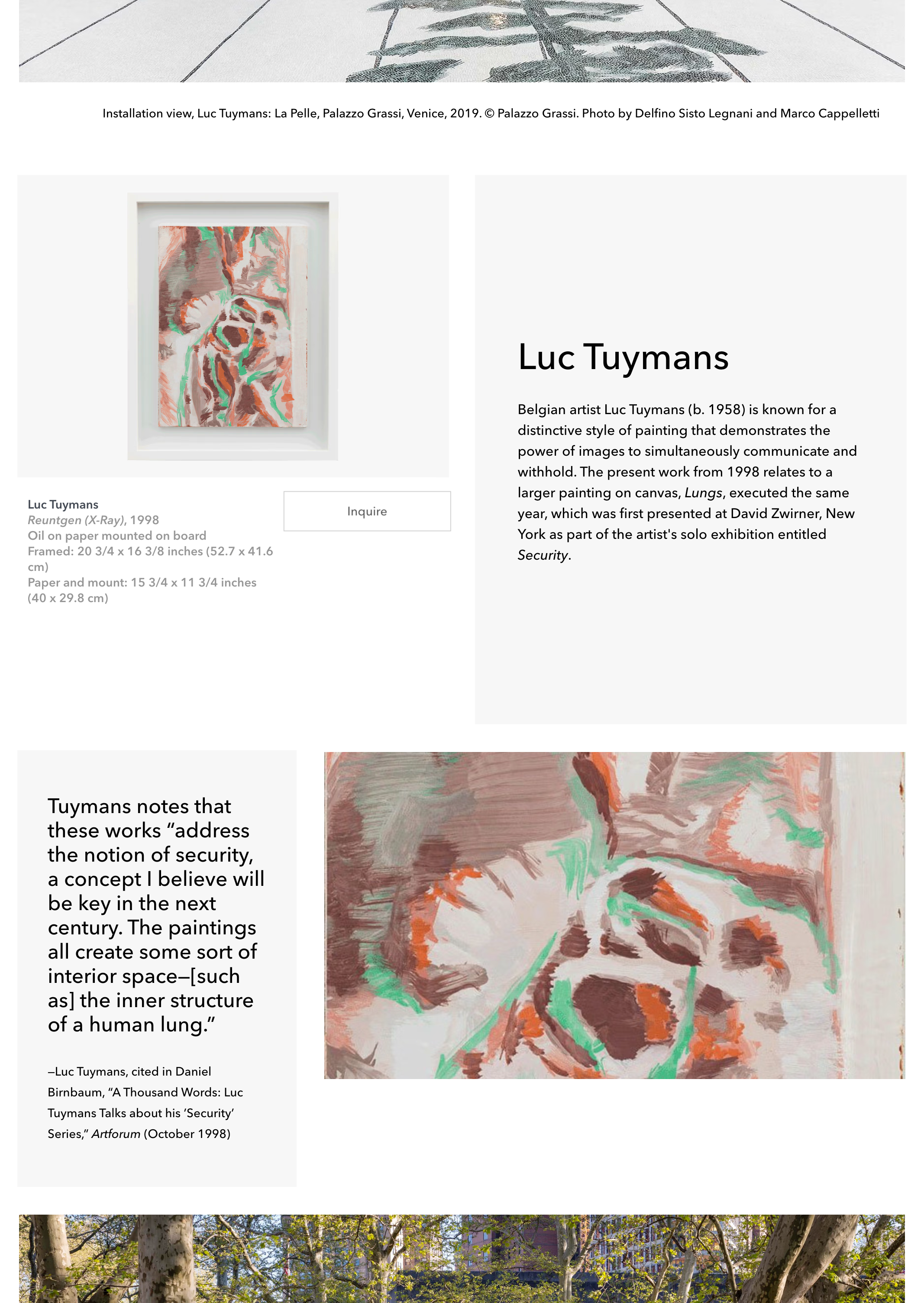
Artwork was presented alongside information about the artist and artwork.
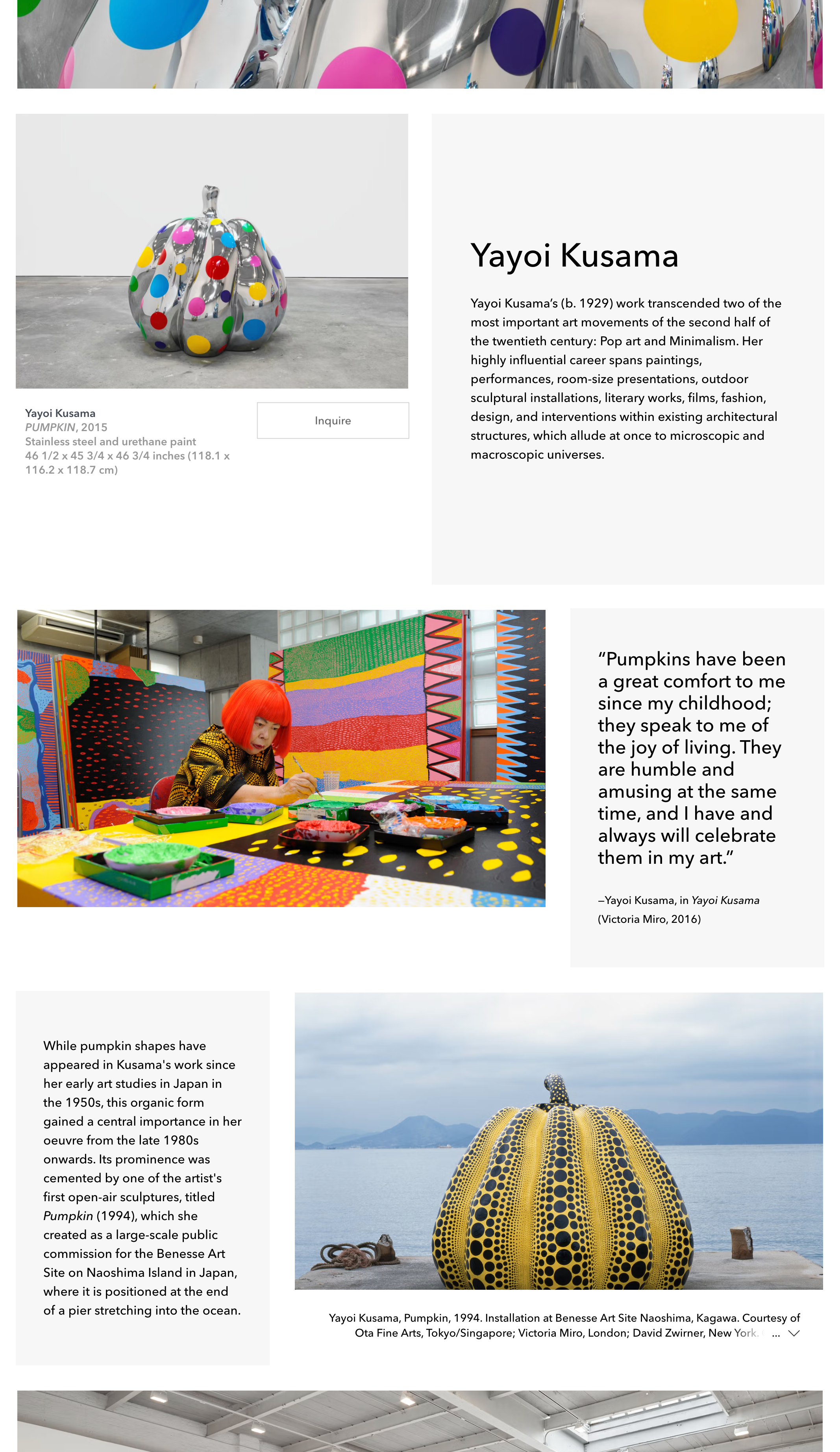
Each artist section had its own rhythm of text and image.